



play_arrow
Listeners:
Top listeners:
00:00
00:00
volume_up
chevron_left
-
 play_arrow
Don't Be Conformed | Ep58 LightWay
-
play_arrow
Grafting in the Gentiles | Ep56 LightWay
-
play_arrow
Calling on the Name of the Lord | Ep55 LightWay
-
play_arrow
Faith, Confession & Obedience | Ep54 LightWay
-
play_arrow
Zeal Without Knowledge | Ep53 LightWay
-
play_arrow
Paul and the Church at Rome | Ep50 LightWay
Conversion of a Devout Man | Ep46
-
play_arrow
PLAY EPISODE
Transcript arrow_drop_down

Transcript
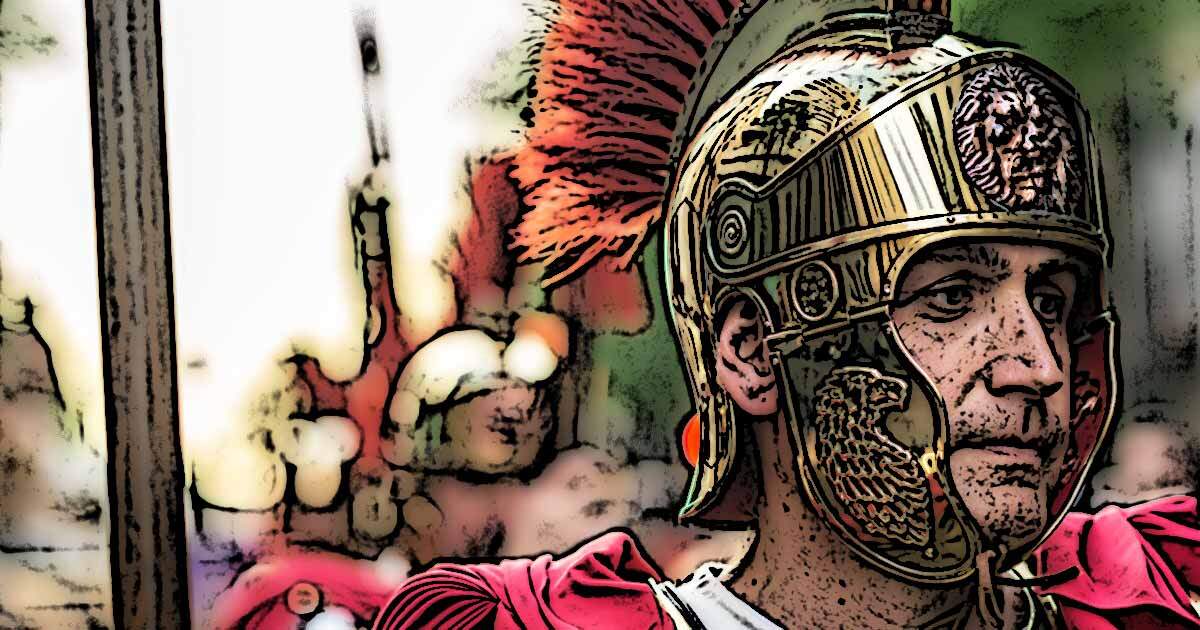
Acts 10, 1 and 2 says, there was a man at Caesarea named Cornelius, a centurion of what was called the Italian cohort, a devout man and one who feared God with all his household and gave many alms to the Jewish people and prayed to God continually. There’s a description of a wonderful man.
We would love to have church members like that. We’d love to have citizens in this town like that. Notice again what this man was like.
First off, he is a centurion, which means he is in the army. He has a hundred men under his authority and he is part of a cohort, which is a group of a thousand men soldiers. But notice what it said about this man.
A devout man, one who feared God with all his household, gave many alms to the Jewish people and prayed to God continually. This man was probably what we would say was a proselyte, a proselyte at the gate. He was not really a full-fledged Jewish person, Jewish religion, but he was one who was following their laws and worship and things like that.
And yet what we’re going to see is this. This is about eight years after the church began in the city of Jerusalem, as is recorded in the second chapter of Acts. At this time, the Jews are the only people who are members of the church.
God has not yet opened the door or invited the Gentiles to become a part of the church. From this text that was read, one to think that this man was a Christian, but he was probably a proselyte of the Jewish system, but he was not really a New Testament Christian yet. He was doing all that he knew to do, which had been what God had accepted.
You see, he was following the old law, even as a Gentile, doing it as closely as he could. There were two kinds of proselytes. The full-fledged proselyte would be a man who was circumcised and became Jewish.
This kind of proselyte would not have been circumcised. He would have been keeping the law and doing what he could, but he would not have yet submitted to circumcision, which would have made him a full-fledged Jew in Jewish religion. But we do see this man as a great man.
I want us to think about what we learn about this man’s salvation. We are reading about this from Acts 10.1 through chapter 11, verse 18. And because he was the very first Gentile, some special things happened to him.
Peter was called to the house. Peter said as he began to speak, the Holy Spirit fell upon Cornelius and his household, which was the baptism of the Holy Spirit. Peter said he was just like what happened to us at the beginning, the beginning that Peter had in mind is Acts 2, when the Holy Spirit baptism fell upon the apostle.
This has been eight years. The Holy Spirit baptism had not happened in between that time. These are the only two cases where people were baptized in the Holy Spirit, but they were baptized in the Spirit for different reasons.
The apostles were baptized in the Holy Spirit to empower them to carry out God’s commission. It enabled them to remember everything that Jesus taught them, enabled them to write and speak under the power of the Holy Spirit. Now Cornelius’ baptism of the Holy Spirit was to convince the Jewish people that the Gentile people could now be accepted in the church.
That’s found in Acts 11, verse 18. Peter explained this to the other apostles in Jerusalem. As we stop and think about this, we see the baptism the Holy Spirit came upon Cornelius.
That did not save him. Holy Spirit baptism never saved anybody. The Holy Spirit baptism was never a command, but it was only a promise.
It was a promise that was made to the apostle and that it was fulfilled also here upon the household of Cornelius. As it were, it happened on the apostles who were Jews, and now they didn’t happen on Cornelius as a Gentile. It was the beginning of inviting people.
When the apostles were baptized in the Holy Spirit, the Jews were invited to become Christians. Now then that Cornelius is a Gentile and the baptism of the Holy Spirit comes upon him, the Gentile people are invited to become Christians and be a part of the church, but it did not save him. Notice what else.
He was a great man. He had lived a good life, but that good life did not save him. There are lots of people who believe if I just live good, I can go to heaven.
Some philosophy is be good, do good, go to heaven. It’s great to be good, and it’s good for the family, and it’s good for the community, but it does not forgive us of our sins. Jesus Christ never said, God the Father never revealed, that all you have to do is be good.
You know, we might be good, and it would be good for the community, but if that would save us, then Jesus Christ would not have had to come and die. You see, sin had to be paid for. I don’t care how good we are, we have sin.
All have sinned and fall short of the glory of God, Paul says. Cornelius was not saved because he was a good man. He was not saved because the baptism of the Holy Spirit came upon him and his household.
It came for a purpose, and that enabled Peter to understand and believe that now then Christ invited the Gentiles into his church. So what did save Cornelius? It is interesting, as we read the account of what led up to all of this, is that the angel told Cornelius to send to Joppa and to find Peter, and that he would speak words whereby you and your household will be saved. That’s Acts 11.14. Notice again what it said.
The angel said that you invite Peter and he will speak words whereby you and your house can be saved. The baptism of the Holy Spirit didn’t save him, but the words that Peter did. What was Peter going to preach to him? He’s going to preach to him the Gospel.
Paul says in Romans 1.16, but I’m not ashamed of the Gospel of Christ, for it’s the power of God unto salvation to everyone that believes, to the Jew first, and also to the Greek. That’s what Peter was going to preach. He was going to preach about the death, the burial, and the resurrection of Jesus Christ.
That was the message. The baptism of the Holy Spirit had nothing to do with it except to convince the Jews and Peter that you can preach the Gospel of this man. That’s what was going to happen.
He preached to him the message of Jesus Christ, the death of Jesus Christ, and then he expected Cornelius to be obedient to that. That’s the reason when he spoke this. Acts 10, verse 48, Peter said he commanded them to be baptized.
Faith in Jesus Christ is part of what Cornelius had to believe in, but that faith alone cannot save us. That’s what James 2.14 and 26 says. Faith without works is dead.
Faith alone cannot save. This man may have believed in Jesus. It seems that he had already heard about Jesus because Peter makes reverence to the fact that you know what Jesus had done, but he had not yet obeyed Jesus.
His faith had to be demonstrated by being obedient to the command that Peter gave. Peter said you’ve got to be baptized. He commanded them to be baptized, and Cornelius and his household were baptized that day.
Here was an honest gentile. He was a good man. He was doing what he could, what he knew to do, and yet he was a man who was willing to see and be obedient to something new that he had not heard before.
When Peter came, he preached, of course, to him the plan of salvation of how Jesus had died, and then he commanded him to be baptized into Jesus Christ. He was obedient to that, and thereby became a child of God. As we stop and think about this, what God expected the Jews in Jerusalem to do is recorded in Acts 2.38. They also cried out and said, what have we got to do? In Acts 2.38, Peter said, repent and be baptized every one of you in the name of Jesus Christ for the forgiveness of sins, and you’ll receive the gift of the Holy Spirit.
This same man, Peter, was sent to the Gentiles, basically with the same message. You’ve got to repent and be baptized for the forgiveness of your sins. What God expected of the Jews in Acts 2, God expected of this Gentile here in Caesarea.
God is not a respecter of persons. What God expected of the Jews, God expected of the Gentiles. What God expected in that first century is what God expects of us in this century.
Jesus, of course, sent his apostles out on the Great Commission to go not only to the Jews, but Mark 16.15 says, go into all the world. He says, he that believes and is baptized will be saved. This is the Great Commission, and it is the means whereby all people can be saved.
If you had been the one commanded by Peter rather than Cornelius, what would you have done? In essence, you have been commanded. The same thing that Cornelius was commanded. Cornelius was commanded to be baptized.
We understand and we want to emphasize baptism is not the only thing that’s connected with how one is saved. We have to believe that Jesus Christ is the Son of God. That’s what Jesus basically said in John 8.24, except to believe that I’m he who will die in your sins.
We have to manifest that faith by changing our life, getting out of sin. We have to repent. Repentance is a change of mind that leads to a change in action.
We must make that change, and it must be something incontinuously. That is, we sin, we repent. As we learn what God wants us to do, we have to do it.
We have to confess our faith in Jesus Christ. But we can confess our faith in Jesus Christ and still not be saved. There are people in Jesus’ ministry who believed in Jesus, but because of the pressure, they would not confess him.
You may believe in Jesus, but you also have to confess that he is Lord and Savior. That confession is not the point at which you’re saved. That confession then leads you to the next step, which is to be baptized.
Baptism is an immersion in water for the right purpose. The purpose is to be forgiven. Baptism, to be correct, must have two things about it.
It must have the right form, which is immersion rather than sprinkling or pouring. Second, it must be for the right purpose. Some churches baptize people by immersion, but they do it because they believe that person is already saved.
But the Bible teaches that people are not saved before they’re baptized, but that they’re saved when they’re baptized. That’s the reason this same man Peter said in 1 Peter 3.21 that baptism does also now save us. He was not discounting faith or repentance or confession.
He was simply saying, this is the point at which salvation is reached when our sins are washed away and we’re right in God’s sight. He was an honest man who had lived a good life. He was a religious person, but he was lost.
What is your condition? You may be living a good life. But that good life alone cannot save you. You may be a person who’s deeply involved in a religion, but it may not be a religion that Jesus Christ approves of just as the religion that he practiced was not approved of.
Therefore, you have to make a break with that and become that New Testament Christian. Let me urge you to think about your salvation. What did you do? When did it happen? Does it match what Cornelius did? Or do you need to do what Cornelius had to do? And if we can assist you in making that decision or discussing and answering your questions, please feel free to contact us.
Let’s be like that honest, gentle Cornelius and make the changes that are necessary in our lives.
Thanks for joining us this week and spending time in God’s Word. Special thanks to Mac Graham, John Kachelman, and LightWay Media for recording, producing, and making this podcast possible.
If you’re ever in the Littleton, New Hampshire area, we’d love to have you join us for worship and Bible study on Sunday afternoons at 4 at the Senior Center. You’re always welcome. For more information about this podcast, visit LightwayMedia.com slash meditating on the word and find the link there to email me to subscribe to my free weekly newsletter with more information you can use in your personal Bible study.
Be sure to like, subscribe, and follow us on your favorite podcast app so that you never miss an episode. And if today’s message encouraged you, share it with someone else and consider leaving a review. It helps others find us too.
Until next week, keep meditating on the Word.
* * * * * * *
“Meditating On The Word” is hosted by Wayne Burger, recorded by Mac Graham, and produced by John Kachelman III and LightWay Media. Follow us on social media to get updates and information when available.
If you’re ever in the Littleton, New Hampshire area, please join Wayne and Mac for worship and Bible study on Sundays at 4 PM at the Senior Center. You’re always welcome! You can get more information on their work online at www.littletonnhchurchofchrist.org.
Want to get more Meditating On The Word in your inbox? Subscribe to Wayne’s weekly publication by sending him an email, and get more study information each week. Email Wayne at gwayneburger@gmail.com or find the link at www.lightwaymedia.com/meditating-on-the-word.
Check out LightWay Media online and find more podcasts and bible study resources at www.lightwaymedia.com. You can shop, listen, or download materials anytime online, and more podcasts are under development for release this year.
Episodes
play_arrow
play_arrow
play_arrow
play_arrow



Be the first to leave a comment