



play_arrow
Listeners:
Top listeners:
00:00
00:00
volume_up
chevron_left
-
 play_arrow
Don't Be Conformed | Ep58 LightWay
-
play_arrow
Grafting in the Gentiles | Ep56 LightWay
-
play_arrow
Calling on the Name of the Lord | Ep55 LightWay
-
play_arrow
Faith, Confession & Obedience | Ep54 LightWay
-
play_arrow
Zeal Without Knowledge | Ep53 LightWay
-
play_arrow
Paul and the Church at Rome | Ep50 LightWay
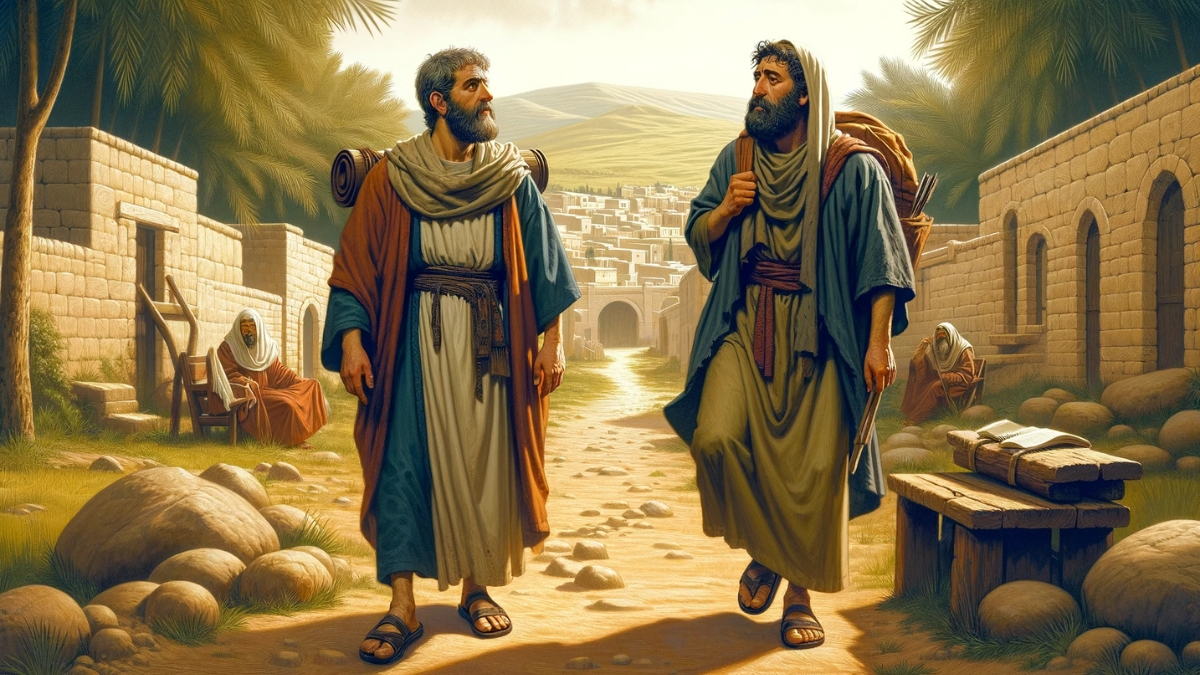
The Mission-Minded Church | Ep48
-
play_arrow
PLAY EPISODE
Transcript arrow_drop_down

Transcript
In Biblical times, there were two classes of people, Jews and everybody else. Everybody else classified as Gentiles.
For the first eight years when the Gospel was being preached and churches were being established, they consisted only of Jewish people. With the conversion of Cornelius and his household, according to Acts 10.1-1118, then Gentiles were being permitted to become Christians and become part of the church.
I’d invite you to listen to the podcast on the conversion of Cornelius. Two or three years after the first Gentile convert was made, Cornelius, there was a Gentile church established in the city of Antioch of Syria. I say Antioch of Syria because there was also an Antioch of Presidio, as mentioned in Acts 13-14.
In this lesson, I want to focus on several events related to the establishment of that Gentile church or that Gentile congregation. I’m going to begin by reading Acts 11-19-21. The text says, So then those who were scattered because of the persecution that occurred in connection with Stephens, they made their way to Phoenicia, Cyprus, and Antioch, speaking the Word to no one except to Jews alone.
But there were some of them, men of Cyprus and Cyrene, who came to Antioch and began speaking to the Greeks, also preaching the Lord Jesus. And the hand of the Lord was with them, and a large number who believed turned to the Lord. The news about them reached the ears of the church in Jerusalem, and they sent Barnabas off to Antioch.
Then when he arrived and witnessed the grace of God, he rejoiced and began to encourage them all with resolute heart to remain true to the Lord, for he was a good man and full of the Holy Spirit and of faith. And considerable numbers were brought to the Lord, and he left for Tarsus to go for Saul, and when he found him, he brought him to Antioch. And for an entire year, they met with the church and talked considerable numbers, and the disciples were first called Christians in Antioch.
I want us to think about this great church that was established in Antioch. The city of Antioch was one of the largest cities in the Roman Empire. Some have said it was probably the third largest city, maybe somewhere between 200,000 and 600,000 people that lived there.
It was built on the banks of the Orontes River. It was 300 miles north of Jerusalem. Although it was in Syria, in biblical times, today that location is literally in Turkey, not Syria.
It was a very modern city with central heating, plumbing, sanitary sewage system, and lighting system, so it was a very modern city for that age. It was also considered a free city. That is, people born there were Roman citizens, but it was also a very corrupt, sinful city, which always amazes me that all and others in the gospel could go into a city that is very corrupt, such as Antioch and such as Corinth, and convert people to Jesus Christ, to get those sinful people to change their lives and live differently.
I would like to know how they did that, because that’s the challenge for us as preachers today, to get wicked people to give up their wickedness and turn to Christ and to live a Christian life. The depravity of Antioch was so well known that when the morals of Rome collapsed, one poet said that the sewage of the Orontes River had flowed into the Tabor River, which was the river on which Rome was built. My point is, Antioch was known for its great sins, great immorality, great sins of the flesh.
That’s what kind of city it was, but God was able to establish the church there. He had those men to go and preach and found hearts that were open to being taught. Someone said this about Antioch, massive in size, totally materialistic in its outlook, ungodly to the core.
Antioch was the antithesis of Jerusalem. That’s the kind of city. That’s going to become a special city, a special church in that city, that’s going to do God’s work especially well.
What we’re going to look at here is the establishment of that church, as we read there in chapter 11, 19 through 22. Let me mention also in verse 20, it says the Greeks live there. That Greek word, the word there is Hellenist.
Hellenist is a technical term for Greek people. Even today in our colleges when you study about Greek culture, it’s called Hellenistic Greek or Hellenistic studies. I want to point this out because some versions do have the word Hellenist there rather than the word Greek.
The word Hellenist was used in two ways in the Bible. Here it is literally the Greek people. In Acts 6 and verse 1 when Luke tells us about the daily ministration, it says the Hellenistic women or the Hellenistic Christians were being neglected in the daily ministration.
These were Jewish people. They were not Greek people but they were called Hellenistic because they were people who had grown up in the Greek society and had taken on much of the Greek culture. So the word Hellenist can mean literally a Greek people or it was and can be used and it was used as Jewish people who simply had become Greek in their thinking and eating and some things like that.
But here in verse 21, notice that it said the hand of the Lord. Large numbers believed and turned to the Lord. Here was a very wicked, wicked city but here were men from these two places who came in there and preached the gospel.
That that gospel message touched their hearts, changed their lives, brought them salvation, enabled them to go and spend eternity with God when they died. What a powerful message. As we think about this church, the church in Antioch of Syria, its early years were very interesting.
You see, the church in Jerusalem heard about what had happened up there in Antioch 300 miles north and they sent Barnabas up there to kind of check on that work. Barnabas was known as the great encourager. Who better to send to these new Christians than a man who would really encourage them.
And when he got there, that’s what he did. He encouraged them to remove a resolute heart to stay faithful to God. He himself had a great message for that church.
But also, it says that he went and found Saul and brought him back to Antioch and they worked together in that church for a year. As we think of this message that he did and the action that he took, Paul, of course, was converted to believe in Jesus on the road to Damascus. Although he wasn’t, didn’t become a Christian, didn’t have his sins forgiven until he was baptized.
I would encourage you to listen to the podcast called What a Blind Man Saul. Well, after Paul’s conversion, he went back to his home area, to the area of Tarsus, and worked in that area. He was there several years preaching and teaching.
It’s just that we do not have record of what he accomplished and what was done through him in that area. But he had been there several years at this time. And when Barnabas saw the Antioch church, recognizing that it was a Gentile church, he thought Paul has been selected by God to be the apostle to the Gentiles.
So I’m going to go get him and bring him back here. And so he went and found him and brought him back there. And they worked for the church for a year.
What a wise decision that was, that these two men worked for that church, and that one of them was Paul, who was going to be this minister to the Gentiles. And his primary work would be to reach out to the Gentile people. There are several significant events in the early history of this church in Antioch that we need to think about.
First off, it is interesting to note that in Acts 11.26, it says that the disciples were first called Christians at Antioch. Again, I would encourage you to listen to the podcast about disciples called Christians, in which we discuss that very idea. The second thing about this is not only that the disciples called Christians, but that was the church that sent Paul out on his three missionary journeys.
They, in a sense, became his sponsoring church and sent him and Barnabas on that first missionary journey, which is recorded in Acts 13 and 14. Then he came back, and in Acts 15.36, they sent him on his second missionary journey, where he crossed Turkey and was called by God, in Acts 16 verses 9 and 10, through a vision of a man in Macedonia saying, come over and help us. Paul and his traveling group left Turkey across the Aegean Sea and entered into Europe and began to preach to the Gentile people there.
In that work, under, as it were, being supported by the church in Antioch, he established the church in Philippa, in Thessalonica, and in Berea. Then he went on down and established the church in Athens, and then in Chariot before he returned from that second missionary journey. But here’s what I want us to see how important that is.
Here was a church, as a Gentile church, who took it upon themselves from God’s instruction and by the Holy Spirit’s guidance to send out Paul and Barnabas on these missionary journeys. That’s the first one. In fact, as we read in chapter 13, 1 through 3, that the Holy Spirit reminded them that that’s what Paul’s mission was to be, and they sent him out.
Let me read those three verses in Acts 13. Now, there were at Antioch, in the church that was there, prophets and teachers. Then he names them Barnabas and Simeon, who was called Niger, and Lucius of Cyrene and Manion, who had been brought up with Herod to teach art and Saul.
Now notice verse 2, while they were ministering to the Lord and fasting, the Holy Spirit said, Set apart for me Barnabas and Saul for the work to which I have called them. Then when they had fasted and prayed and laid their hands on them, they sent them away. And so being sent out by the Holy Spirit, they went down to Lucius and then began their missionary journey.
I want us to think about that great church that took on the responsibility of sending Paul and Barnabas out on these missionary journeys. Many churches today need to do that. Many churches today have done that.
They have sent missionaries to various parts of the world. It’s great when a congregation realizes that their responsibility is not just the local. Their responsibility is to preach the gospel in all the world.
That’s what the Great Commission is. Churches today need to have that attitude that says we’re not just going to keep the gospel here at home. We’re going to send it out.
Antioch was established as the church because some men, Christians, came to that wicked city and established the church there. There are wicked cities today all over the country, this country, and all over the world. Churches of Christ need to send missionaries to those cities.
If you’re a member of the Church of Christ and you’re a part of a congregation, I would urge you to urge them to not just look locally but to send the gospel throughout the world. That was a great church accomplishing a great mission, serving as a great example in sending missionaries out. And so Antioch, and the lesson we want to kind of wind up with here is this.
Antioch was the first Gentile church to be established. And even though it was in a city of a great wickedness, the power of the gospel was able to convert those people from wicked, sinful people to saints, Christians, children of God, and that as a group that came together as the Church of Christ in Antioch, and then they realized by the urging of the Holy Spirit that they had a responsibility, not just to the hundreds of thousands of people who lived in Antioch, but to send Paul and Barnabas out on the missionary journeys whereby they would convert lots of people and establish congregations all over the world. That’s what Paul did for the next several years.
They probably sent him out about the year 45, and he returned probably about 50, and he continued this missionary work for the rest of his life. May we raise up missionaries like Paul. May we raise up congregations like the church in Antioch who not only look at themselves and their area, but who look beyond to the fields that are widened to harvest, to the wicked cities that need the gospel, and to the opportunities that are out there in the United States and across the lands, wherever it may be.
If you are a part of a church, please continue to urge that church to be a missionary-minded church. Thanks for joining us this week and spending time in God’s Word. Special thanks to Mac Graham, John Kachelman, and LightWay Media for recording, producing, and making this podcast possible.
If you’re ever in the Littleton, New Hampshire area, we’d love to have you join us for worship and Bible study on Sunday afternoons at 4 at the Senior Center. You’re always welcome. For more information about this podcast, visit lightweightmedia.com/meditating-on-the-word and find the link there to email me to subscribe to my free weekly newsletter with more information you can use in your personal Bible study.
Be sure to like, subscribe, and follow us on your favorite podcast app so that you never miss an episode. And if today’s message encouraged you, share it with someone else and consider leaving a review. It helps others find us too.
Until next week, keep meditating on the Word.
* * * * * * *
“Meditating On The Word” is hosted by Wayne Burger, recorded by Mac Graham, and produced by John Kachelman III and LightWay Media. Follow us on social media to get updates and information when available.
If you’re ever in the Littleton, New Hampshire area, please join Wayne and Mac for worship and Bible study on Sundays at 4 PM at the Senior Center. You’re always welcome! You can get more information on their work online at www.littletonnhchurchofchrist.org.
Want to get more Meditating On The Word in your inbox? Subscribe to Wayne’s weekly publication by sending him an email, and get more study information each week. Email Wayne at gwayneburger@gmail.com or find the link at www.lightwaymedia.com/meditating-on-the-word.
Check out LightWay Media online and find more podcasts and bible study resources at www.lightwaymedia.com. You can shop, listen, or download materials anytime online, and more podcasts are under development for release this year.
Episodes
play_arrow
play_arrow
play_arrow
play_arrow



Be the first to leave a comment