



play_arrow
Listeners:
Top listeners:
00:00
00:00
volume_up
chevron_left
-
 play_arrow
Don't Be Conformed | Ep58 LightWay
-
play_arrow
Grafting in the Gentiles | Ep56 LightWay
-
play_arrow
Calling on the Name of the Lord | Ep55 LightWay
-
play_arrow
Faith, Confession & Obedience | Ep54 LightWay
-
play_arrow
Zeal Without Knowledge | Ep53 LightWay
-
play_arrow
Paul and the Church at Rome | Ep50 LightWay
The Cross | Ep12
-
play_arrow
PLAY EPISODE
Transcript arrow_drop_down

Transcript
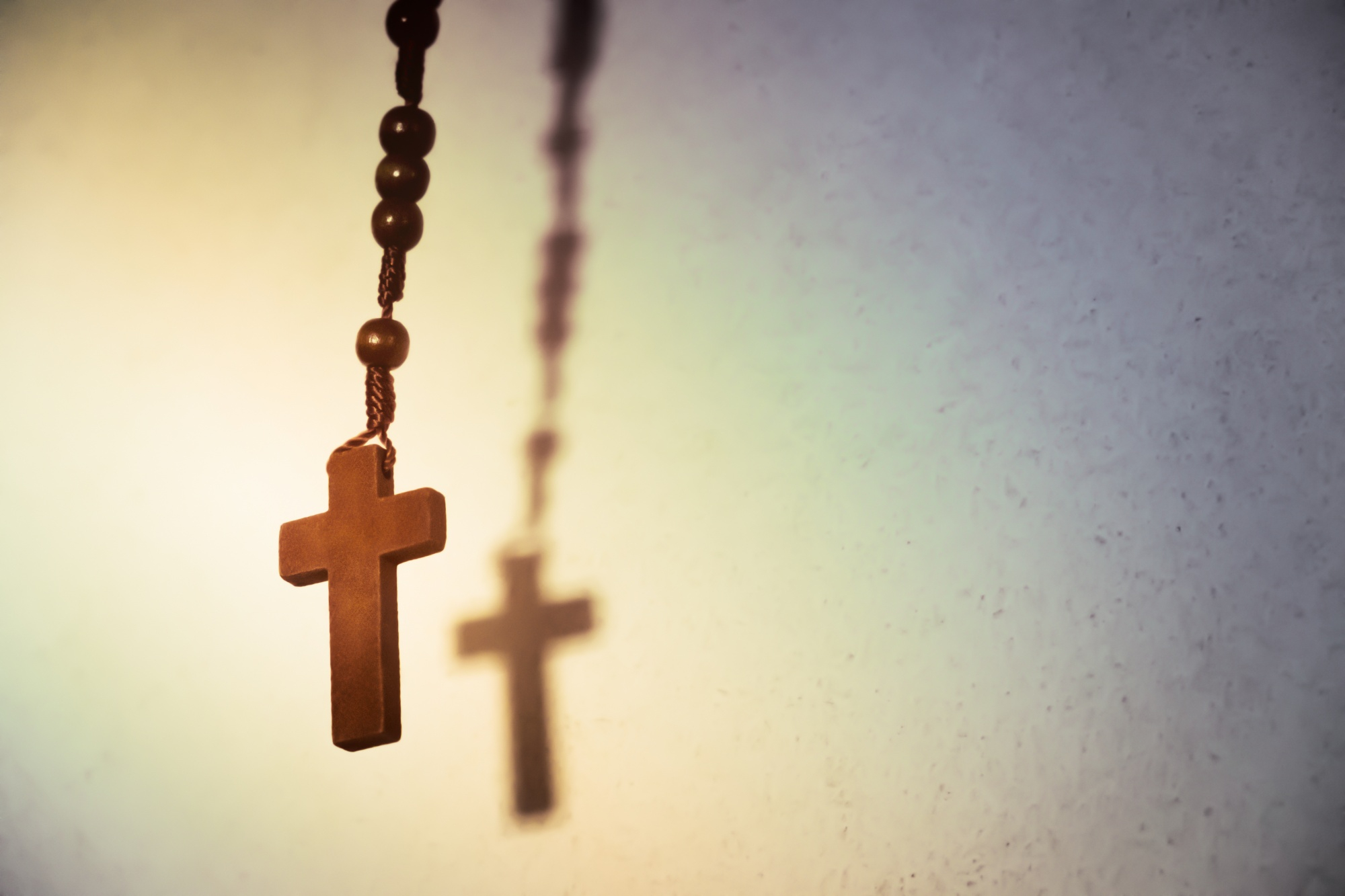
Can you imagine somebody today having earrings designed to look like an electric chair? How about some earrings that look like a hangman’s noose? Both of these, of course, are symbols of death. Who wants to honor an object of death? Why then is it fashionable to have earrings or a necklace in the shape of a cross? It’s because of what took place on that cross.
In the first century, the cross was comparable to an electric chair. In polite Roman society, the word cross was an obscenity, not to be uttered in conversation.
That’s what F.F. Bruce, a biblical scholar, said about that. So why is the cross an object of the cruelest death, honored when we will not honor the electric chair or the gallows? It was one significant event that occurred on that cross, the death of Christ, that makes the difference. The cross may be worn as a declaration of one’s faith, and if so, fine.
But often, it seems to be worn as a good-luck charm. I’m amazed when I see it worn by some who seem not to live what the cross declares. If one doesn’t live as the cross demands, what does the cross become other than some sort of lucky rabbit’s foot? The cross isn’t just a lucky charm, to be worn to bring somebody success in an area or some claim of spirituality.
Think about a few passages which declare emphatically what the cross symbolizes. Of course, we could expect it, and it is. There are a number of passages in the Bible that talk about the cross and really tell us what the cross is about.
The first of these cross symbolism that we’re going to talk about is that the cross represents reconciliation. In Ephesians 2, in fact the whole book of Ephesians, Paul is talking about uniting the Jews and the Gentiles. There was a hatred between those two groups that’s hard to imagine today.
But he was writing that letter to say that the cross represents reconciliation. It brings about reconciliation between men and God. It brings about reconciliation between men.
The Bible puts the emphasis on that, and we understand why it needs to be because all of us have sinned. Paul said, all have sinned and come short of the glory of God. We also understand numerous passages could be looked at, but Isaiah 59, 1 and 2, the principle found in the Old Testament.
He says, Behold, the Lord’s hand is not shortened that he cannot save, neither is his ear heavy that he cannot hear. But your iniquities have separated between you and your God, and your sins have hid his face from you that he will not hear. Notice what that passage says.
Sin separates us from God, and until our sin is forgiven, we are separated from God. And so the cross represents a reconciliation that’s taking place between man and God because Christ on the cross paid the debt sin. So that we could be united.
I’m going to read Ephesians 2, and we’ll talk about it now, and then a little bit later with regard to reconciliation between people. But in Ephesians 2, Paul reminds the Gentiles as to what they were. Therefore, remember that formerly you, the Gentiles in the flesh, who are called uncircumcision by the so-called circumcision, which is performed in the flesh by human hands, remember that you were at that time separate from Christ, excluded from the commonwealth of Israel, strangers to the covenants of promise, having no hope and without God in the world.
What a sad condition. Think about what he said. He said, when you were in that sinful condition, you were separated from Christ, you were excluded from the commonwealth of Israel, you were a stranger to God and to the covenants of promise, you had no hope, and you were without God in the world.
But now let’s notice what he says in verse 13, Ephesians 2, verse 13. But now, in Christ Jesus, you who formerly were far off have been brought near by the blood of Christ. Notice that, and in the book of Ephesians, the folks who are far off are Gentiles, those who are near are the Jews.
But notice what he says about these folks. But now, in Christ Jesus, you who formerly were far off have been brought near by the blood of Christ. You see, the blood of Christ was shed on the cross, and the cross therefore represents a reconciliation between man and God.
But let’s keep reading. For he himself is our peace, who made both groups into one and broke down the barrier of this dividing wall. Now then, he’s talking about the division between Jews and Gentiles.
And it’s through the cross that Jews and Gentiles can be united again. It’s only as Christ would have it, and only as Christ would teach it, and only as we practice the Christian principles, that we can really have unity between such diverse groups of people. And so, notice again in verse 13, it’s in Christ Jesus.
Of course, we get into Christ Jesus by being baptized into him. Paul says in Romans 6:3 and 4, Know you not that so many of us as were baptized into Jesus Christ, were baptized into his death. Therefore, we are buried with him by baptism into death.
And like as Christ was raised up to the dead by the glory of the Father, even so, we also should walk a newness of life. And so he says, But now in Christ Jesus, you who formerly were far off have been brought near by the blood of Christ. For he himself is our peace, who made both groups into one and broke down the barrier of the dividing wall.
The barrier between the Jews and Gentiles was the law of Moses. You see, the law of Moses was given to the Jews. When God gave them that law, he pulled them out, separated them from the rest of the world.
And that law was the barrier between the Jews and everybody else who were labeled Gentiles. But when Jesus died on the cross, he removed that old law and brought those two groups back together. And so it says, I’ll read it again in verse 14, For he himself is our peace, who made both groups into one and broke down the barrier of the dividing wall by abolishing in his flesh the enmity, which is the law of commandments contained in ordinances, so that in himself he might make the two into one new man, thus establishing peace.
So again, the cross is not only a means of obtaining peace between God and man, but is also the means of having peace between groups or people individually. The Jews and Gentiles were brought together by the cross of Christ. And so the cross represents reconciliation.
But I also want to go on and read another verse with regard to this. Verse 16 says, well, he just said that the two into one man, thus establishing peace, and might reconcile them both in one body to God through the cross by it having put to death the enmity. Notice where he said reconciliation takes place.
He said, reconcile them both in one body. In Ephesians 1, verse 22 and 23, we’ll learn that the body is the same thing as the church. God brings about reconciliation between men through the cross in the church, and therefore the cross is symbolic of reconciliation.
Reconciliation between God and man, reconciliation between man and man. And so as we see the cross symbol, it ought not just be sworn as kind of a good luck charm, or just when we need God to do something for us. If one wears that cross, he ought to live like that cross, and what that cross demands of us.
And so how great it is that God has done that. The events on the cross enable man to be reconciled to God. But that is accomplished only as one becomes an active part of the church.
One cannot be reconciled to God outside the church. That’s why when one is baptized, the Lord adds him to the church, Acts 2, 41, and 47. And the same thing can be seen in 1 Corinthians 12, 13, where we’re all baptized into one body.
Too often people want the reconciliation without the responsibility of being an active part of the local church. It cannot happen. If you are going to be reconciled to God, if God is going to forgive you of your sins, you have to be in the body of Christ, the church of Christ.
Sin is a violation of God’s law. That’s what 1 John 3, 4 says, sin is lawlessness. Since that is true, then forgiveness must take place in the mind of God.
Thus, for one to be forgiven, he must satisfy God’s requirements. Too many people think that they can get to determine what God wants. Therefore, they devise their own standards, and when they meet that standard, they feel that God is satisfied.
It doesn’t work that way. That plan doesn’t work even between individuals. When one has been hurt, the one who did the hurting must meet the expectation of the one who is hurt before they can be forgiveness.
That same principle is true with regard to the sin against God. When God has been sinned against, God has to determine what one has to do to have forgiveness. The cross represents that, but it represents it because sin had to be paid for.
God, to be just, had to pay for sin. He could not ignore sin. That’s the reason Paul says he is just and the justifier, in Romans 3, 24.
He’s just in that he paid the sin. He’s the justifier in that he paid the debt we couldn’t be. You and I, when we reach the blood of Christ by being baptized, we are the justified.
You have God being just. Justice means you get what you deserve. Sin had to be paid for, and God paid it.
Then he did that by Jesus being the justification for our sins, and that we now have the privilege of being reconciled to God in the body, the place of the church. We are Christ’s body on the earth, and we have to be in his body because he’s coming back to accept that body and take that body to heaven. Another point that I want to look at for a little bit is the cross represents peace.
I’ve already mentioned it as we read Ephesians 2. One who is living in sin doesn’t have peace with God, even if he thinks he has peace. He doesn’t have peace between himself and God. Sometimes he doesn’t even have peace within himself.
You see, guilt is there. People who still have a conscience realize when they’ve sinned that they’re guilty, and their conscience bothers them. It goes with them everywhere they go, and so therefore they don’t have peace with themselves.
And quite often those kind of people don’t have peace with others. They are dissatisfied with themselves and everything about them, and they’re not satisfied with anybody else. But when one has the proper relationship with God through the cross of Christ, he has peace with all parties.
Paul wrote also, It was the Father’s good pleasure through him, Christ, to reconcile all things to himself, having made peace through the blood of his cross, Colossians 1, 19, and 20. Sin requires the shedding of blood, and no other blood other than that of Jesus Christ could blot out sin. Nothing that anyone else could do could cover our sins.
It took the death of Christ on the cross and that blood that was shed so that the debt would be paid so that one could be reconciled to God, and if he’s reconciled to God, he is reconciled to all people who are in God’s family. Through the cross, God put into place the means whereby all men have the kind of backgrounds that can have peace together with God. What a great thought.
That’s the reason Paul said in Romans 5.1, being therefore justified by faith, we have peace. Peace is a wonderful thing. Peace of mind is great.
Peace with others is great. The animosity between the Jews and the Gentiles in the first century is rarely, if ever, equal today. But the death of Christ caused that animosity to be overcome because both parties recognized their own sinfulness and both recognized their need of God’s forgiveness.
Paul explained that peace that was brought about between these two warring factions through Christ. He said in himself, he might make the two into one new man, thus establishing peace, Ephesians 2.15. Christ is the only answer to the severe animosity between groups today. There is a great deal of animosity in our world today.
You can just name it. The Jews and the Arabs, the blacks and the whites, the Native Americans and locals. There’s animosity everywhere.
And that animosity is not ever going to be solved until those individuals obtain peace with God, and thereby then they can have peace with each other. May each of us recognize that all men and women have the same need, and that need is only met by each complying with God’s will. We all need God’s forgiveness, and that forgiveness is found only in one place, the church.
Therefore, we ought to be one in Christ. As we think about the cross, we can understand now why Paul said, may it never be that I would glory except in the cross of our Lord Jesus Christ, through which the world has been crucified to me and I to the world. It’s Galatians 6.14. We can glory or boast in the cross, not because it is just a piece of jewelry to be worn, but because of what happened on that cross and how it has changed the person who wears the jewelry, not the beauty of the jewelry itself.
May we glory in the cross. Thanks for joining us this week and spending time in God’s Word. Special thanks to Mac Graham, John Kachelman, and LightWay Media for recording, producing, and making this podcast possible.
If you’re ever in the Littleton, New Hampshire area, we’d love to have you join us for worship and Bible study on Sunday afternoons at 4 at the Senior Center. You’re always welcome. For more information about this podcast, visit LightwayMedia.com/meditating-on-the-word and sign the link there to email me to subscribe to my free weekly newsletter with more information you can use in your personal Bible study.
Be sure to like, subscribe, and follow us on your favorite podcast app so that you never miss an episode. And if today’s message encouraged you, share it with someone else and consider leaving a review. It helps others find us too.
Until next week, keep meditating on the Word.
* * * * * * *
“Meditating On The Word” is hosted by Wayne Burger, recorded by Mac Graham, and produced by John Kachelman III and LightWay Media. Follow us on social media to get updates and information when available.
If you’re ever in the Littleton, New Hampshire area, please join Wayne and Mac for worship and Bible study on Sundays at 4 PM at the Senior Center. You’re always welcome! You can get more information on their work online at www.littletonnhchurchofchrist.org.
Want to get more Meditating On The Word in your inbox? Subscribe to Wayne’s weekly publication by sending him an email, and get more study information each week. Email Wayne at gwayneburger@gmail.com or find the link at www.lightwaymedia.com/meditating-on-the-word.
Check out LightWay Media online and find more podcasts and bible study resources at www.lightwaymedia.com. You can shop, listen, or download materials anytime online, and more podcasts are under development for release this year.
Episodes
play_arrow
play_arrow
play_arrow
play_arrow



Be the first to leave a comment